Tense bunker management in Last Nuclear Darkness survival sim
Last Nuclear Darkness, by Iván Marcelo Pretti, casts you as a bunker overseer after a global nuclear catastrophe, charged with keeping a small community alive. The game has players manage scarce supplies, assign scavenging missions, and craft tools while random events and moral dilemmas shape each run. Key systems include survivor mental-health tracking, bunker expansion, and interconnected resource chains. It targets players who prefer demanding survival simulations and high-stakes decision-making.
What kind of simulation places you in an underground leadership role?
The game is a post-apocalyptic survival simulation that centers on running a subterranean shelter, where the player's core loop is making resource and personnel choices under pressure. As overseer you balance immediate needs against long-term continuity, making moral and strategic decisions that determine whether the community endures. Emergent narrative arises from randomized events and character interactions rather than a scripted story, so each playthrough unfolds differently.
Does the game support multiplayer, and how do core mechanics drive risk?
The experience is strictly single-player, which concentrates design on systemic interdependence: food, water, oxygen, and electricity affect one another, and scavenging missions carry radiation and injury risks. Crafting and bunker expansion act as mid-to-long-term investments that change available options. Randomized moral dilemmas force trade-offs, so decision-making focuses on probability, mitigation, and prioritizing human lives over expendable gains.
How does the presentation shape the mood and player perception?
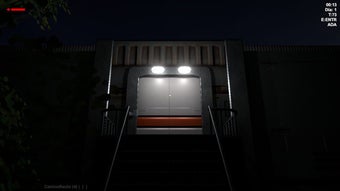
The title cultivates a claustrophobic, dark atmosphere to reinforce scarcity and tension, a choice noted in community feedback praising its atmospheric pressure. Audio and visual design push a survival tone that emphasizes confinement and danger rather than spectacle. The interface supports tracking survivor states and resource levels, keeping critical information accessible while the setting maintains an oppressive mood that influences play decisions.
Is the learning curve steep and what keeps players returning?
The game enforces a challenging difficulty curve that rewards careful planning and risk assessment, which suits methodical players who enjoy high-stakes problem solving. Replayability comes from randomized events, shifting survivor interactions, and different expansion choices that alter each campaign. Because emergent systems drive the experience instead of a linear narrative, motivated players revisit runs to explore alternate moral outcomes and recovery strategies.
Recommended for methodical survival players who accept demanding, high-stakes systems
The game is a demanding choice for players who favor tense management and ethically fraught decisions, offering long-term engagement through variable runs and survival puzzles. Casual players seeking a guided story or lighter sessions should expect a narrow appeal; the title rewards patience and deliberate planning rather than relaxed play.
Pros
Claustrophobic atmosphere emphasizes the grim reality of post-nuclear life
Interconnected systems make single failures escalate into meaningful crises
Survivor mental-health tracking adds a human layer to management
Cons
Steep difficulty curve requires meticulous planning from the start
Single-player only, so no cooperative or competitive social modes
Laws concerning the use of this software vary from country to country. We do not encourage or condone the use of this program if it is in violation of these laws. Softonic may receive a referral fee if you click or buy any of the products featured here.







.png)